What Is Linnea Visual SHADER? A Quick Guide for Developers and Artists
Linnea Visual SHADER is a graphics programming concept tied to the portfolio work of Linnea Lager, a C++ game developer who built a custom rendering engine (the “Linnea Engine”) using DirectX 11. It is not a standalone commercial shader tool — it refers to the visual shader and rendering work demonstrated through her engine and projects, including a procedural plant editor powered by L-systems.
Here is a quick summary of what you need to know:
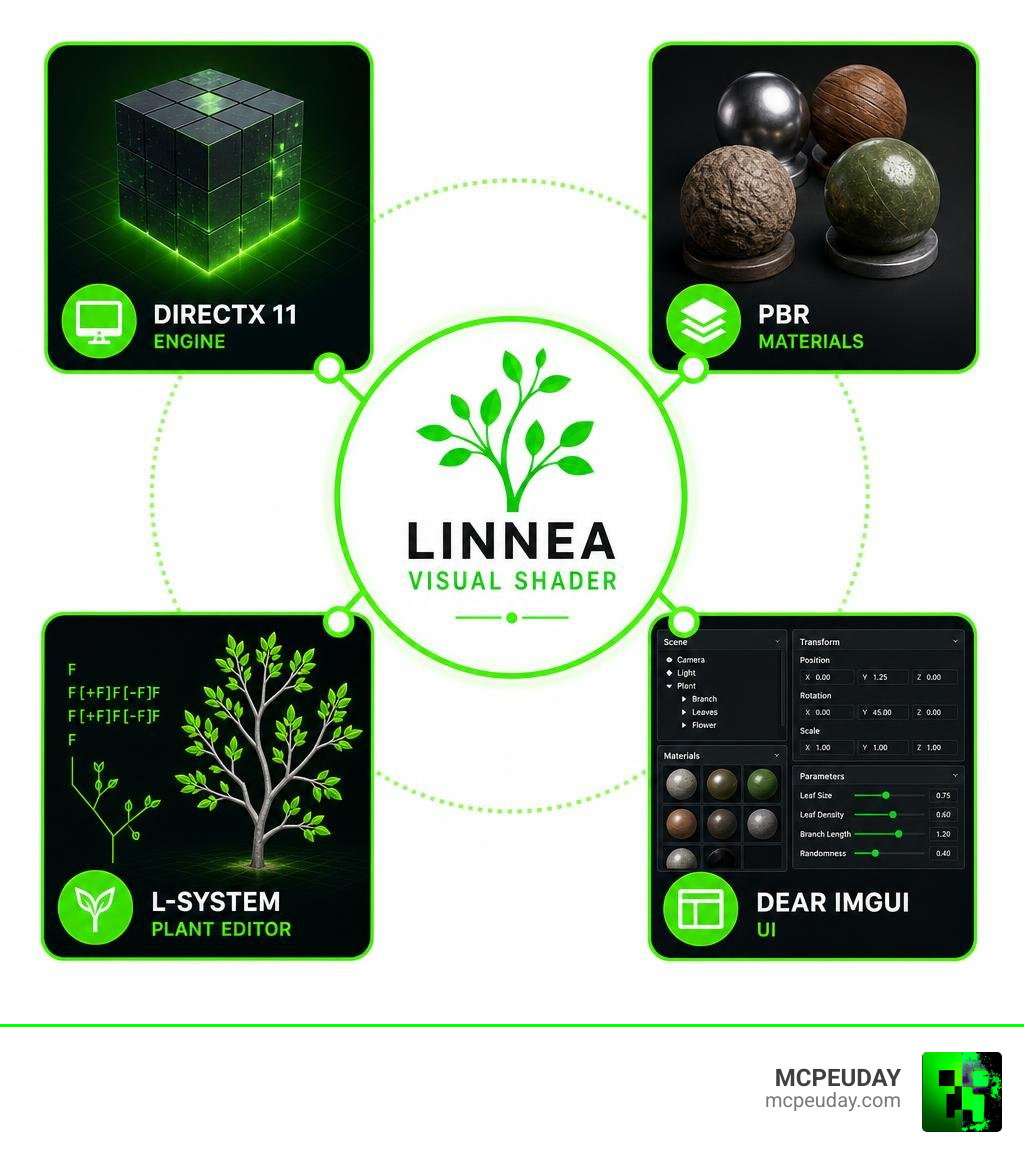
- What it is: A custom DirectX 11 graphics engine with visual shader capabilities, PBR materials, and a Dear ImGui interface
- Key feature: A procedural plant editor that uses L-systems to generate realistic plant and tree meshes
- Who built it: Linnea Lager, a C++ game programmer with projects including Octo Quest, Beast, and Ghost Run
- Open source: Yes — source code is available on GitHub
- Not to be confused with: LinaVG (a 2D vector graphics library), Godot VisualShaders, or ShaderNova
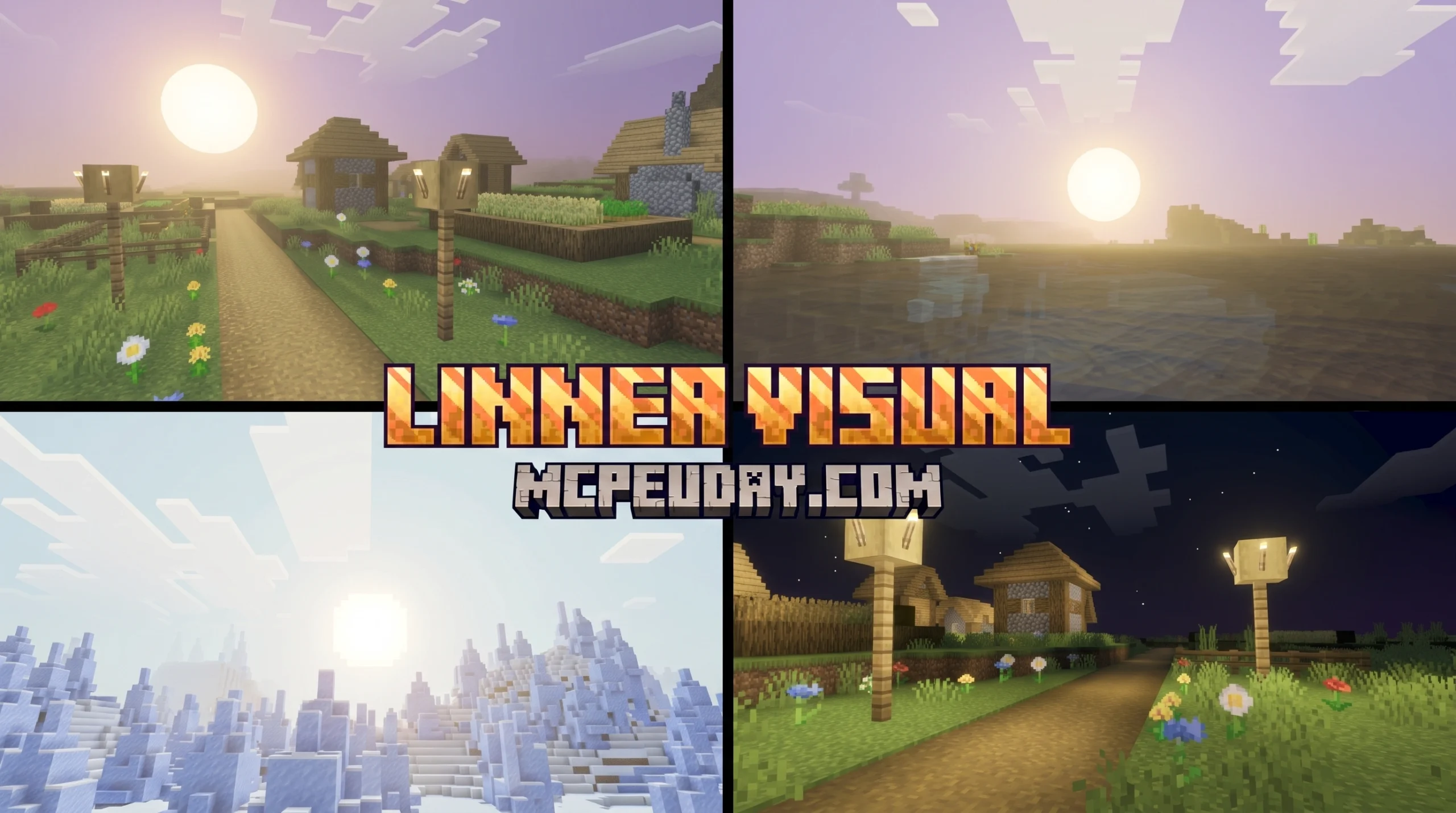
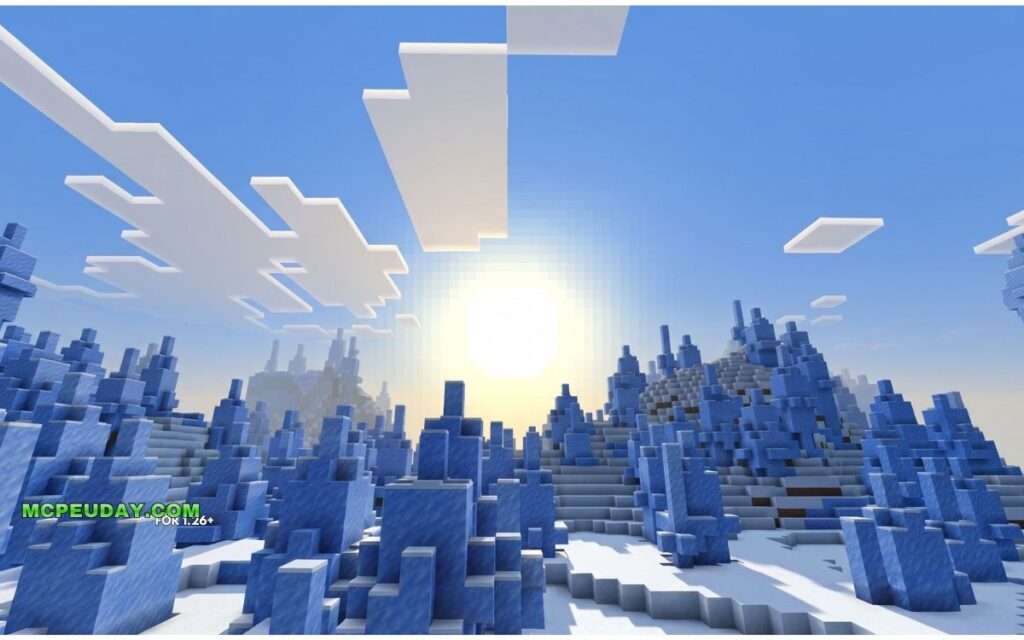
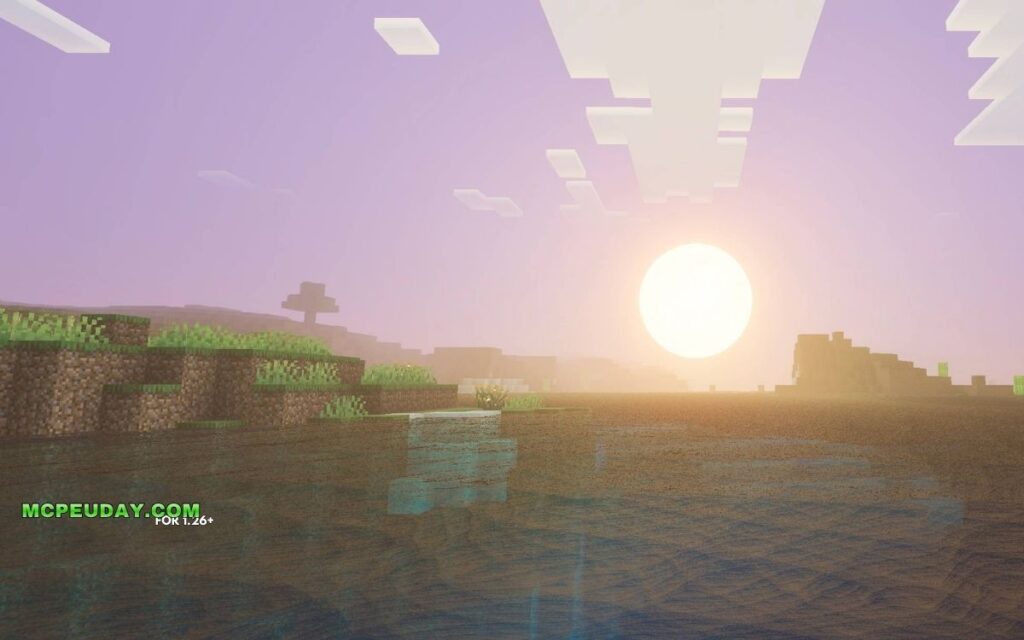
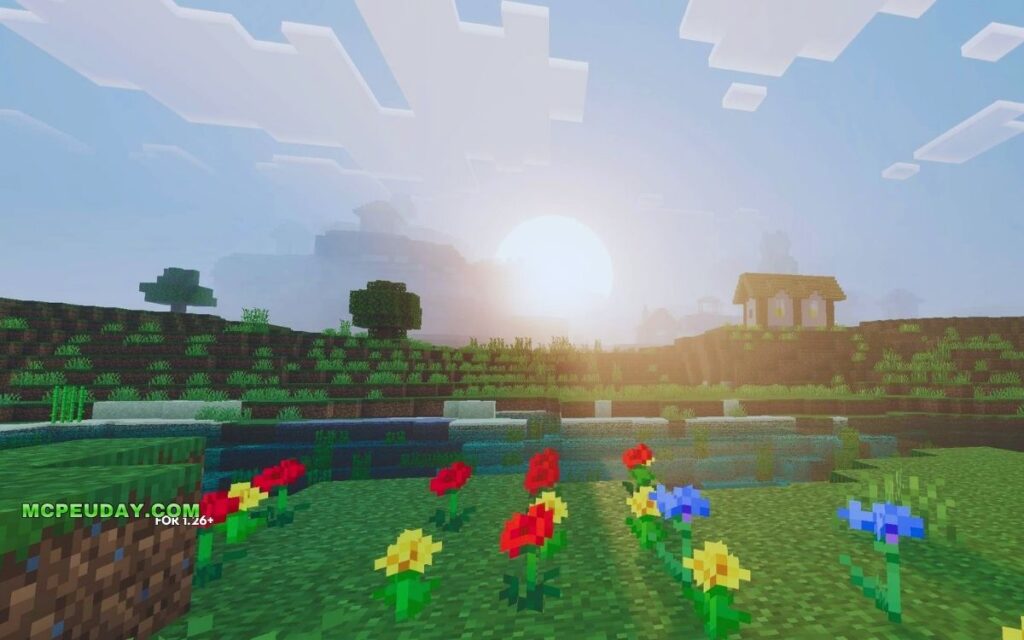
If you landed here looking for Minecraft shaders, check out MCPEUDAY’s shader guides for MCPE — this article covers the technical programming side of visual shaders instead.
So why does Linnea Visual SHADER matter? Visual shaders sit at the heart of how games look and feel. They control lighting, material surfaces, and procedural effects like growing plants or glowing water. Linnea Lager’s work is a great example of how a solo developer can build a fully custom shader pipeline from scratch — including tools that artists can actually use to create content in real time.
Think about it this way: most developers rely on engines like Unity or Godot for shader work. Building your own renderer with PBR lighting, custom meshes, and a live UI is a serious technical achievement — and it shows exactly how visual shaders work under the hood.
Who is Linnea Lager and Her Game Development Journey?
To understand the core architecture of the Linnea Visual SHADER system, we first need to look at the programmer behind it. Linnea Lager is an accomplished C++ game programmer who has spent years diving deep into graphics pipelines, engine architecture, and procedural generation. Her technical showcase is documented thoroughly on her portfolio site, Linnea Lager – C++ Game Programming Portfolio .
Throughout her journey, Linnea has focused heavily on the mathematical and architectural aspects of game design. Her work spans across custom engine development, gameplay programming patterns, and user-friendly editor design. In her projects, she frequently implements advanced programming patterns, such as:
- The Post Master Singleton: A robust event-handling pattern that coordinates communication between game objects (like players, enemies, and UI elements) without creating tight coupling.
- Animation Blending: Utilizing linear interpolation (LERP) for position and scale, combined with spherical linear interpolation (SLERP) for rotation, to achieve smooth, natural character transitions.
- Procedural Mesh Generation: Writing custom code that constructs 3D geometry dynamically in memory rather than loading pre-built FBX or OBJ models.
It is worth noting that the name “Linnea” is shared by several notable creators and figures across different industries. For instance, you might come across the portfolio of Linnea Viola , an animator, illustrator, and designer, or the work of the television and film makeup designer Makeupbylinnea .
In the gaming community, you might even hear the name referenced in popular culture, such as the character Linnea in Genshin Impact. Fans often discuss her character builds in videos like EARLY ACCESS C0 LINNEA SHOWCASE & BUILD or share excitement over official character art like the Linnea Splash Art from Genshin Impact Revealed! . However, in custom graphics pipelines and C++ rendering engines, the Linnea Visual SHADER ecosystem is entirely the creation of programmer Linnea Lager.
What is the Linnea Visual SHADER?
At its core, Linnea Visual SHADER represents the rendering pipeline, shader configurations, and visual editor tools built into the custom “Linnea Engine.” Developed over a six-month period, this engine serves as a sandbox for testing graphics techniques using the DirectX 11 API.
For Minecraft players visiting us here at MCPEUDAY, you might be familiar with how shaders like the Newb X Linett Shader For Minecraft Pe 1 21 transform blocky environments with realistic lighting. While mobile shaders modify pre-existing game engines, Linnea’s visual shader project is built entirely from the ground up. It handles everything from allocating GPU buffers to compiling HLSL code manually.
Core Features of the Linnea Visual SHADER Architecture
The architecture of this visual shader and engine setup is built around four primary pillars:
- Physically Based Rendering (PBR) Materials: Rather than relying on simple flat textures, the shader pipeline supports realistic material properties. By calculating albedo, roughness, metallic values, and normal maps, surfaces reflect light accurately based on their physical properties.
- Dear ImGui Integration: To make the graphics engine interactive, Linnea integrated Dear ImGui. This immediate-mode GUI library provides developers with sliders, input fields, and drop-down menus to adjust shader parameters in real time.
- L-Systems (Lindenmayer Systems): The engine features a dedicated specialization project—a plant editor—that uses L-systems to procedurally generate complex organic structures.
- Procedural Mesh Construction: Instead of rendering static, pre-modeled assets, the engine calculates the vertices, indices, and normals of plants on the fly, feeding them directly into the DirectX 11 rendering pipeline.
Technical Capabilities of Linnea Visual SHADER
To understand how the engine renders these complex structures, we can look at the underlying data flow. The custom engine uses a specialized PlantNode class. This class manages the hierarchical parent-child relationships of branches. When a plant is generated, the engine calculates vertex positions along a mathematical path, generates cylindrical branch meshes, and applies transformation matrices to position them correctly in 3D space.
The lighting model in the engine supports both ambient and directional light sources. These light calculations are performed inside custom HLSL shaders that process normal maps to create realistic surface depth. This level of control is comparable to professional-grade pipelines, such as Unity’s custom rendering solutions like the Eye Shader | High Definition RP | 13.0.0 , which use specialized mathematical models to simulate complex light scattering.
Comparing Linnea Visual SHADER to Other Graphics Solutions
To put the capabilities of Linnea Visual SHADER into perspective, it helps to compare it to other popular graphics libraries and shader frameworks available in the industry.
LinaVG
LinaVG is a specialized 2D vector graphics library designed for drawing anti-aliased convex shapes, lines, and text. As hosted in the inanevin/LinaVG repository, it has accumulated 266 stars, 33 forks, and is written primarily in C (79.5%) and C++ (12.2%). While LinaVG is incredible for rendering UI elements and vector paths with custom OpenGL backends, it is strictly a 2D library. In contrast, the Linnea Engine is a full 3D rendering pipeline with PBR materials and procedural mesh generation.
Godot VisualShaders
For developers who prefer a node-based approach, Godot offers an excellent built-in tool. According to the guide on Using VisualShaders — Godot Engine (stable) documentation in English , Godot’s VisualShaders allow developers to build complex materials by connecting nodes (such as Fresnel, Boolean, and Expression nodes) without writing code. While Godot translates these graphs into shader scripts behind the scenes, Linnea’s engine utilizes a custom C++ codebase where the procedural logic is handled programmatically, using Dear ImGui for direct parameter manipulation.
ShaderNova
Another unique tool is ShaderNova, a lightweight post-processing application designed to apply fragment shader effects (like brightening, darkening, or negative filters) to external windows on AmigaOS4 systems. As documented on OS4Depot – Your one stop for AmigaOS4 files , ShaderNova has accumulated 310 downloads. While ShaderNova acts as a window mirror post-processor, Linnea’s system is a complete, interactive world-space renderer.
Comparison Table
| Feature / Metric | Linnea Visual SHADER | LinaVG | Godot VisualShaders | ShaderNova |
|---|---|---|---|---|
| Primary Focus | 3D Procedural Mesh & PBR | 2D Vector Graphics / UI | Engine-Integrated Shader Graphs | Window Post-Processing |
| Rendering API | DirectX 11 | Custom (OpenGL Example) | Vulkan / OpenGL / WebGL | Warp3D Nova (AmigaOS4) |
| Language | C++ | C (79.5%), C++ (12.2%) | Godot Shading Language / GLSL | GLSL / SPIR-V |
| Key Use Case | Procedural plants & custom engines | High-performance 2D UI rendering | Rapid game material creation | OS-level window visual effects |
Practical Applications and Game Projects
The practical power of the Linnea Visual SHADER pipeline is best demonstrated through the real-world projects Linnea Lager has built.
The Plant Editor Specialization Project
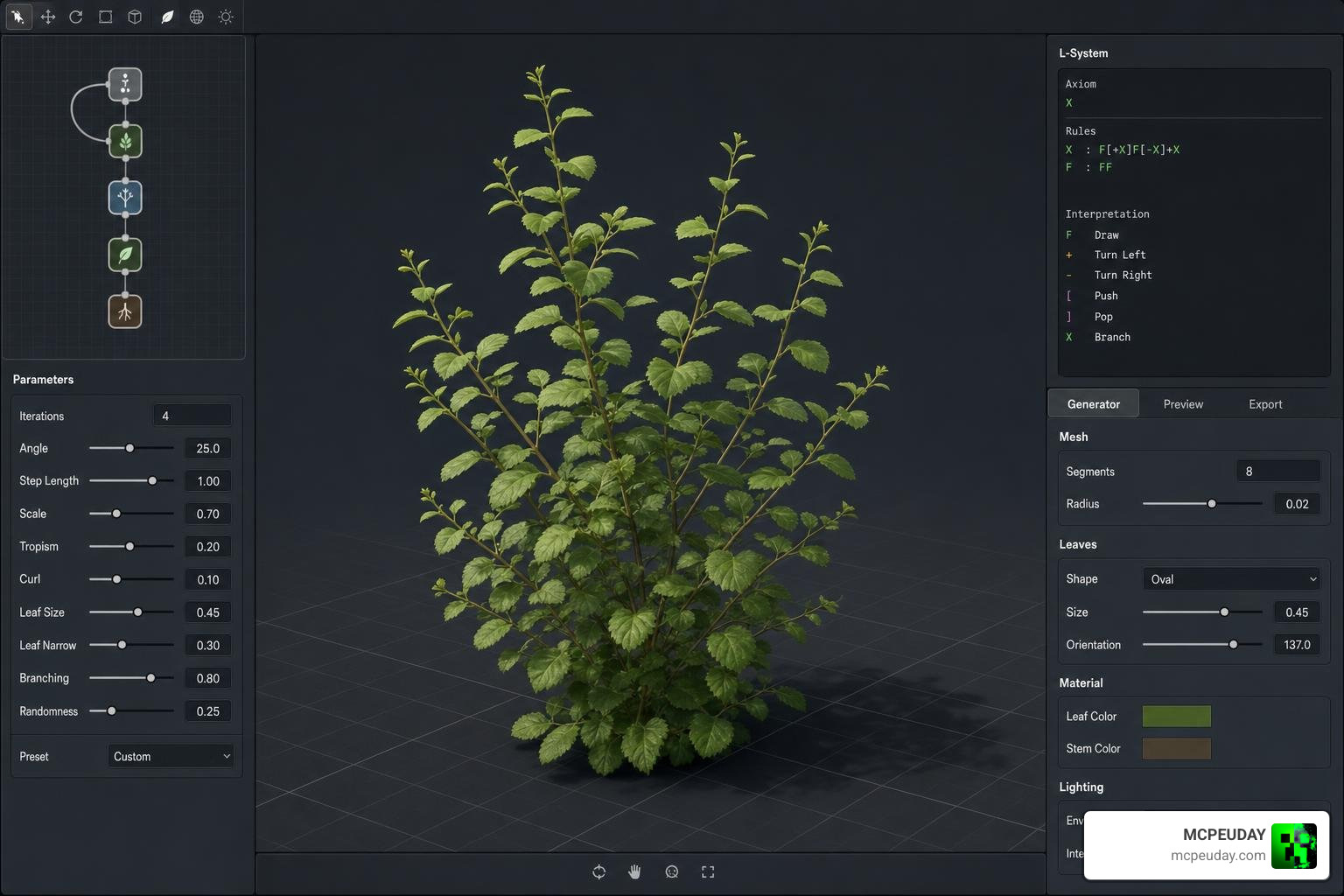
The standout application of her custom engine is the Plant Editor. This tool allows users to input custom L-system rules and axioms. Over 4 to 7 recursive iterations, the program generates a long command string. The engine then parses this string to construct complex 3D plant meshes. Using the Dear ImGui interface, users can dynamically adjust:
- Branch length and width
- Growth angles and randomness
- PBR material textures and lighting reflectivity
This demonstrates how procedural generation can drastically reduce the time needed to build natural environments.
Octo Quest
Octo Quest was Linnea’s first major C++ game project. It served as a practical testing ground for implementing core design patterns, handling complex collision detection, and structuring an interactive game loop from scratch.
Beast
In the project Beast, Linnea contributed to the gameplay systems and rendering logic. The game utilized advanced animation blending techniques, ensuring that character movements remained fluid and responsive under varying gameplay conditions.
For gamers who love seeing these kinds of advanced visual techniques applied to their favorite games, we highly recommend checking out our showcase on the Newb X Lmi Shader For Minecraft Pe 2026 Ultra Realistic Graphics Smooth Fps Boost. It is a fantastic example of how modern shader techniques can bring ultra-realistic lighting and smooth performance to mobile devices!
Frequently Asked Questions about Linnea Visual SHADER
What is the main purpose of Linnea Visual SHADER?
The main purpose of the project is to demonstrate how a custom DirectX 11 rendering pipeline can be paired with procedural generation techniques. It provides a real-time, interactive environment where developers can write custom shaders, adjust lighting, and generate complex 3D meshes on the fly with instant visual feedback.
How does the plant editor use L-systems?
L-systems (Lindenmayer systems) are mathematical string-rewriting algorithms. The editor starts with a simple string of characters (an “axiom”) and applies replacement rules over multiple iterations. The final generated string acts as a list of drawing instructions (e.g., “draw branch,” “turn left,” “save position”), which the engine’s PlantNode class processes to generate 3D cylindrical meshes.
Is Linnea Visual SHADER open source?
Yes! The source code for the custom DirectX 11 engine, the plant editor, and her various game projects is publicly available. You can access the repositories directly through her portfolio to download, run, and experiment with the code yourself.
Conclusion
The Linnea Visual SHADER ecosystem is an inspiring showcase of what can be accomplished with low-level graphics programming. By building a custom DirectX 11 engine, integrating interactive UI tools, and leveraging the mathematical beauty of L-systems, Linnea Lager has created a fantastic learning resource for aspiring engine developers and technical artists alike.
Here at MCPEUDAY, we are passionate about visual innovation and graphics technology. Whether you are building your own custom engine in C++ or looking to push your mobile device to its absolute limits with the Best Shaders for MCPE 1.21-2026, understanding how shaders work under the hood is the key to creating breathtaking virtual worlds. Stay tuned for more deep dives, mod reviews, and shader guides!